Understanding Small Intestinal Bacterial Overgrowth in Children and How SIBO Leads to Nutrient Loss
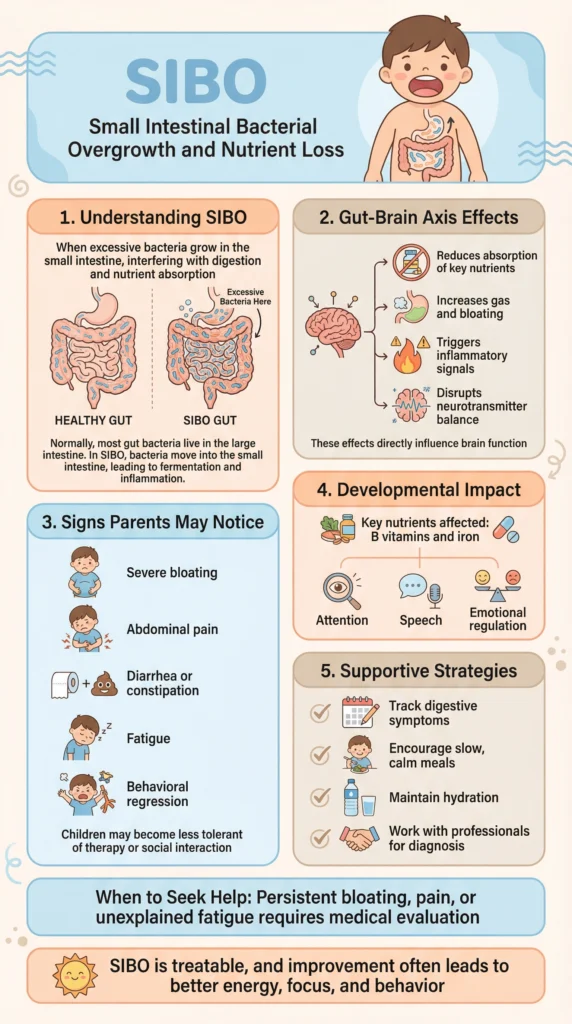
Small Intestinal Bacterial Overgrowth, commonly known as SIBO, is a condition where excessive bacteria grow in the small intestine. Normally, most gut bacteria are concentrated in the large intestine, where they support digestion. However, in SIBO, bacteria migrate into the small intestine, disrupting normal digestive processes. This imbalance leads to fermentation of food in the wrong place, causing gas, irritation, and inflammation. As a result, the body struggles to break down and absorb essential nutrients properly. For children, especially those with developmental challenges, this disruption can affect both physical health and brain function. Understanding SIBO is important because its effects go beyond digestion. It can influence energy levels, behaviour, and overall development through its impact on the gut–brain connection.
How SIBO Affects the Gut–Brain Axis and Disrupts Nutrient Absorption in Kids
The gut–brain axis is a communication system between the digestive system and the brain. When SIBO develops, this connection can be negatively affected. The overgrowth of bacteria produces by products that irritate the gut lining and send inflammatory signals throughout the body.
These changes can interfere with how the brain functions and processes information. Key effects of SIBO include:
- Reduced absorption of essential nutrients needed for growth and brain function
- Increased gas and bloating due to improper fermentation
- Activation of inflammatory responses affecting the body and brain
- Disruption of neurotransmitter balance influencing mood and behaviour
Because the brain depends on proper nutrition and balanced signalling, these disruptions can impact
attention, emotional regulation, and learning abilities.
Common Signs and Symptoms of SIBO in Children That Parents Should Not Ignore
SIBO can present with a range of digestive and behavioural symptoms. These signs may vary in severity but often persist if the condition is not addressed.
- Severe bloating, especially after meals
- Abdominal pain or discomfort
- Diarrhea, constipation, or alternating bowel patterns
- Fatigue or low energy levels
- Behavioural regression or reduced engagement
Children may also show decreased tolerance for therapy sessions, schoolwork, or social interactions. These changes are often linked to discomfort and reduced energy caused by poor nutrient absorption.
How Nutrient Deficiencies From SIBO Impact Child Development and Brain Function
When the body cannot absorb nutrients effectively, it directly affects a child’s growth and development. Deficiencies in important nutrients such as B vitamins and iron can impair brain function. Children may experience difficulties with attention, slower speech development, and challenges in emotional regulation. Over time, these issues can affect learning progress and daily functioning. Energy levels may also drop, making it harder for children to participate in activities or maintain focus throughout the day. Addressing nutrient loss is therefore a key part of supporting overall development.
Practical Supportive Strategies for Managing SIBO Symptoms and Improving Gut Health
While medical evaluation is essential for diagnosis and treatment, parents can support their child’s digestive health through simple daily practices. These strategies help reduce stress on the gut and promote better function.
- Track digestive symptoms to identify patterns and triggers
- Encourage slow, calm eating to support proper digestion
- Maintain adequate hydration throughout the day
- Work closely with healthcare professionals for proper guidance
Consistency in these habits can help improve comfort and support recovery alongside medical care.
When Parents Should Seek Medical Help for Persistent Digestive Issues in Children
If a child experiences ongoing bloating, abdominal pain, or unexplained fatigue, it is important to seek medical evaluation. Persistent symptoms should not be ignored, as early diagnosis can prevent further complications. Healthcare professionals may recommend specific tests and treatments to address bacterial overgrowth and restore balance in the gut. Early intervention often leads to better outcomes and faster improvement.
Reassurance for Parents Managing SIBO and Its Effects on Children’s Health
It is important for parents to know that SIBO is a treatable condition. With the right approach, many children show significant improvement in digestion, energy levels, and behaviour. As nutrient absorption improves, children often regain focus, become more active, and respond better to learning and therapy. Patience and proper care play a key role in recovery. By understanding the connection between gut health and development, parents can take informed steps to support their child’s well-being and long-term progress.