Vomiting and the Gut–Brain Axis in Children with Developmental Delays: Understanding the Hidden Connection
Vomiting in children with developmental delays can be distressing and confusing for parents. While occasional vomiting may result from a viral infection or simple stomach upset, recurrent vomiting often signals deeper concerns related to the gut–brain axis in children. This powerful communication network between the digestive system and the brain can influence behaviour, mood, and overall development. For children with autism spectrum disorder (ASD) or ADHD, vomiting may not always be linked to infection. Instead, it may reflect underlying gastrointestinal sensitivity, reflux, food intolerances, or motility challenges. Understanding the link between vomiting and neurological regulation helps parents respond with informed care rather than frustration.
Understanding Vomiting in Developmental Conditions
Vomiting is the forceful expulsion of stomach contents and can occur due to reflux, gut inflammation, food sensitivities, or delayed gastric emptying. In children with sensory processing differences, the digestive system may be more reactive. Even mild irritation can trigger a strong vomiting reflex.
The connection between gastrointestinal problems and behaviour in children is especially significant in developmental conditions. When vomiting becomes recurrent, it does more than disrupt meals. It can affect hydration, appetite regulation, and emotional stability. Because some children struggle to explain nausea or discomfort, vomiting may appear sudden or unpredictable. In non-verbal children, behavioural cues often replace verbal complaints.
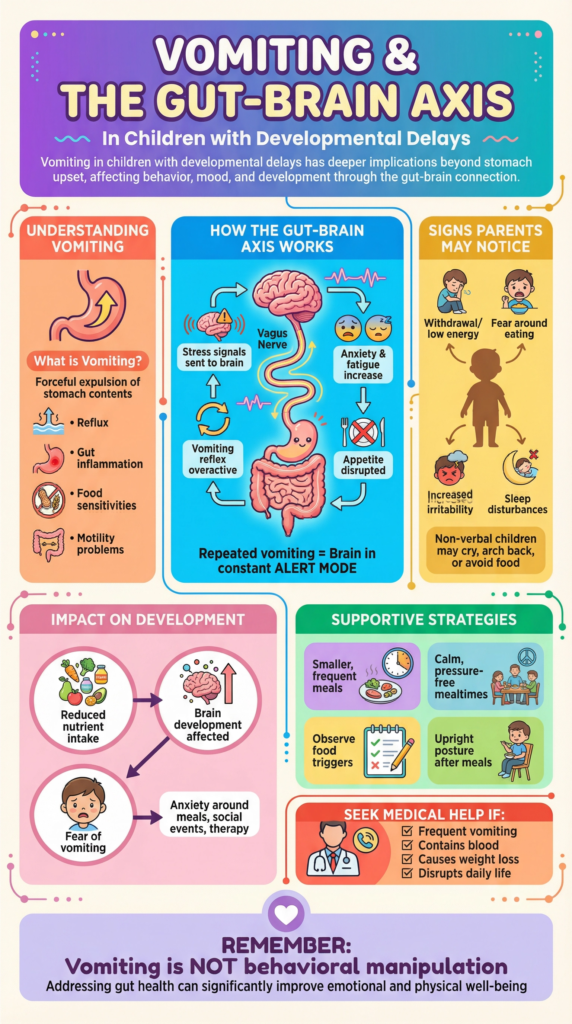
How the Gut–Brain Axis Influences Vomiting and Behaviour
The gut and brain communicate continuously through the vagus nerve and other neural pathways. When the digestive tract is irritated, signals are sent directly to the brain’s stress centres. This can activate the vomiting reflex and increase anxiety levels. Repeated digestive distress may lead to a cycle of physical and emotional reactions. Over time, the brain may remain in a heightened state of alertness, affecting sleep, mood, and concentration.
When the gut is irritated, parents may notice:
- Increased stress signals sent to the brain
- An overactive vomiting reflex
- Heightened anxiety and fatigue
- Disrupted appetite regulation
- Greater emotional reactivity
This gut–brain feedback loop in developmental delays can make children more sensitive to routine changes, sensory input, and social demands.
Signs Parents Should Watch For
Vomiting does not only affect the body; it also influences daily behaviour. Recognizing early signs of gastrointestinal distress in children with special needs can help prevent escalation.
Parents may observe:
- Withdrawal or unusually low energy
- Fear or resistance around meals
- Increased irritability or sudden mood changes
- Sleep disturbances
- Regression in communication or self-care skills
- Back arching, crying, or food avoidance in non-verbal children
These behaviours are often signs of discomfort rather than intentional misbehaviour.
Impact on Brain Development and Emotional Regulation
Frequent vomiting can reduce nutrient absorption, leading to deficiencies that affect brain growth and cognitive development. Poor intake may influence attention span, emotional regulation, and learning capacity. In addition, the fear of vomiting can create anxiety around food, school, therapy sessions, or social gatherings. This can limit participation and reduce confidence. Over time, the child may associate certain environments with discomfort, reinforcing avoidance behaviours. Addressing vomiting early supports both neurological development and emotional wellbeing.
Supportive Strategies for Parents
Practical steps can reduce digestive stress and create a safer eating environment. A calm, structured approach often improves tolerance and comfort.
Helpful strategies include:
- Offering smaller, more frequent meals
- Keeping mealtimes calm and pressure-free
- Observing potential food triggers
- Encouraging upright posture after meals
- Maintaining predictable daily routines
These approaches support digestive regulation while lowering stress around eating.
When to Seek Medical Help
Parents should consult a healthcare professional if vomiting is frequent, contains blood, causes weight loss, leads to dehydration, or significantly disrupts daily life. A paediatric evaluation can identify reflux, allergies, motility disorders, or other gastrointestinal conditions requiring treatment.
Reassurance for Parents
Vomiting is not behavioural manipulation. It is often a physical response influenced by the gut–brain connection in children with developmental delays. By addressing digestive health and emotional regulation together, families can improve both physical comfort and behavioural stability, supporting healthier development overall.