Nausea and Appetite Challenges in Children with Developmental Delays: Understanding the Gut–Brain Connection
Nausea and appetite challenges in children with developmental delays can deeply affect daily life, growth, and emotional wellbeing. When a child frequently feels queasy or avoids food, it is not always a case of picky eating. In many situations, the issue is linked to the gut–brain axis in children, a communication system that connects digestive function with emotional and neurological health. Understanding the relationship between nausea, food refusal, and brain development helps parents respond with compassion and informed strategies.
What Is Nausea and Why Does It Affect Eating?
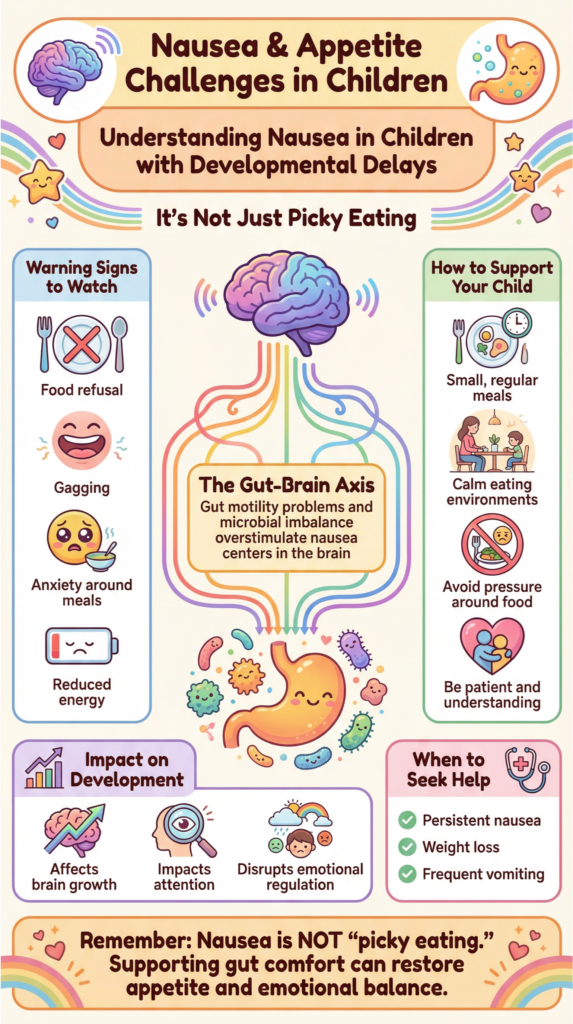
Nausea is the uncomfortable sensation of queasiness that may or may not lead to vomiting. It often reduces appetite, increases food aversion, and creates anxiety around mealtimes. In children with developmental delays, sensory sensitivities can intensify this feeling, making certain textures, smells, or tastes overwhelming. Digestive discomfort and nausea in children can interfere with regular eating patterns. When nausea becomes frequent, children may begin to associate meals with discomfort, leading to avoidance behaviours. Over time, this can disrupt proper nutrition and growth. The gut–brain communication system in developmental disorders plays a major role. If gut motility is slow or irregular, food may move through the digestive system unevenly, increasing bloating and queasiness. Additionally, microbial imbalance in the gut can overstimulate nausea centres in the brain, heightening discomfort and stress responses.
The Developmental Impact of Ongoing Nausea
Adequate nutrition is essential for brain development, attention, and emotional regulation. When a child consistently eats less due to nausea, the effects may extend beyond physical health. Reduced calorie intake can lower energy levels, affect concentration, and increase irritability. Chronic nausea and poor appetite in children with special needs may also influence emotional stability. When the body feels unwell, the nervous system becomes more reactive. This can lead to meltdowns, withdrawal, or heightened anxiety, especially around meals or new foods. Children who experience frequent queasiness may develop fear-based eating patterns. Mealtimes become stressful instead of comforting, affecting family routines and social participation. Addressing nausea early supports both physical growth and emotional development.
Common Signs of Nausea and Appetite Difficulties
Because some children struggle to describe internal sensations, parents must watch for indirect signs. Early recognition of nausea-related feeding challenges in children allows for timely intervention.
Parents may notice:
- Persistent food refusal or limited food variety
- Gagging during meals
- Anxiety or distress before eating
- Reduced energy and fatigue
- Complaints of stomach discomfort without clear illness
These signs are important signals from the body. Nausea is not simply behavioural resistance; it is often a genuine physical experience.
Supportive Approaches to Improve Appetite and Comfort
Creating a supportive feeding environment can reduce stress and improve food acceptance. Gentle, structured strategies are often more effective than pressure-based approaches.
Helpful strategies include:
- Offering small, regular meals instead of large portions
- Maintaining a calm and predictable eating routine
- Reducing sensory overload during meals
- Avoiding pressure, bribes, or force around food
- Observing patterns related to specific foods or times of day
These supportive feeding strategies for children with nausea focus on comfort first. When the gut feels calmer, appetite often improves naturally.
When to Seek Medical Evaluation
Persistent nausea, unexplained weight loss, frequent vomiting, or significant changes in bowel habits require professional assessment. A paediatrician or gastroenterologist can evaluate underlying causes such as reflux, motility disorders, or food intolerances. Early medical evaluation for chronic nausea in children ensures proper treatment and prevents long-term complications.
A Reassuring Message for Parents
Nausea is not “picky eating,” and food refusal is not always behavioural defiance. The connection between gut health and emotional balance in children is powerful. By addressing digestive comfort and reducing stress around meals, parents can help restore appetite, support brain development, and strengthen emotional stability.