Irritable Bowel Syndrome (IBS) and Stress Sensitivity in Children with Developmental Delays
Irritable Bowel Syndrome (IBS) in children is increasingly recognized, particularly among those with developmental delays. While IBS does not cause structural damage to the digestive tract, it can significantly affect daily comfort, emotional regulation, and stress tolerance. The connection between IBS and stress sensitivity in children is strongly influenced by the gut–brain axis, a two-way communication system linking digestive function and neurological response. For children with autism spectrum disorder (ASD), ADHD, or sensory processing differences, this gut–brain interaction can intensify both physical symptoms and emotional reactions. Understanding this cycle helps parents support both digestive health and behavioural wellbeing.
Understanding IBS and the Gut–Brain Stress Cycle
IBS is a functional gastrointestinal disorder characterized by abdominal pain combined with diarrhea, constipation, or alternating bowel patterns. Unlike inflammatory bowel diseases, IBS does not show visible damage on medical testing. However, the pain and bowel irregularities are very real. The gut–brain connection in pediatric IBS explains why stress often worsens symptoms. When a child feels anxious or overwhelmed, stress hormones influence gut motility and sensitivity. This can speed up or slow down digestion, leading to cramping, urgency, or constipation. In return, gut pain sends distress signals back to the brain, increasing anxiety levels. This ongoing feedback loop between emotional stress and bowel discomfort can make children more reactive to daily challenges. Over time, IBS-related digestive discomfort in children may lower frustration tolerance and increase emotional outbursts. The nervous system becomes more sensitive, making it harder for the child to regulate mood and behaviour. IBS can also interfere with attention and learning. When the body is focused on managing abdominal pain, it becomes difficult to concentrate in school or therapy sessions.
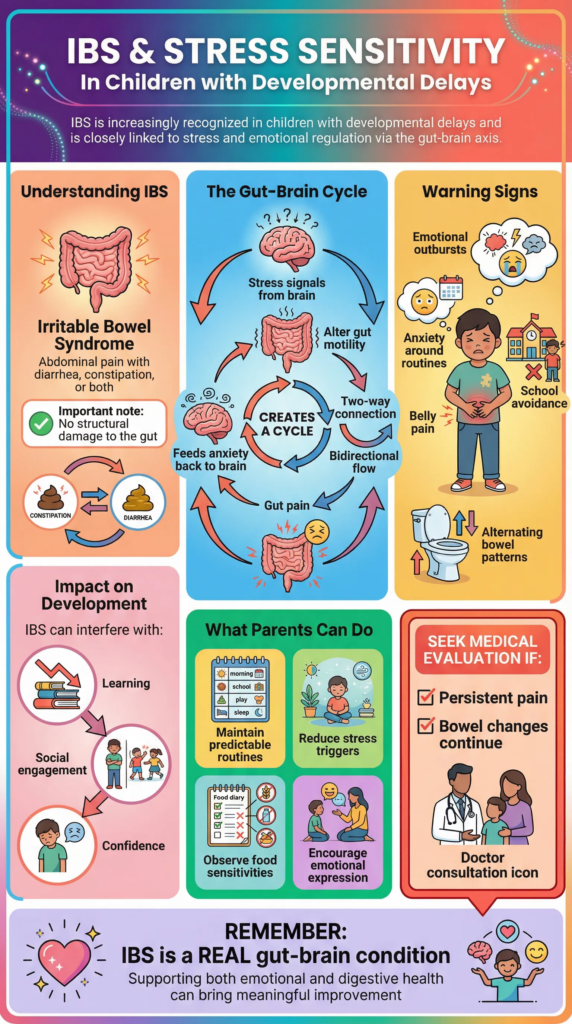
Social participation may decrease if a child fears sudden bowel urgency or discomfort in public settings.
Signs of IBS and Stress Sensitivity Parents Should Watch
Because children may not clearly describe internal discomfort, parents should look for patterns in behaviour and bowel habits. Early recognition of IBS symptoms in children with developmental delays allows for better management and support.
Parents may notice:
- Alternating diarrhea and constipation
- Frequent belly pain without infection
- Increased anxiety around school or daily routines
- School avoidance linked to stomach complaints
- Emotional outbursts during stressful periods
These signs often reflect the close relationship between digestive sensitivity and emotional regulation challenges. A child who appears oppositional or withdrawn may actually be managing chronic abdominal discomfort.