Gut Dysbiosis and Brain Development in Children: How Gut Imbalance Affects Behaviour, Learning, and the Gut–Brain Axis
Gut dysbiosis, or an imbalance in gut bacteria, is increasingly recognized as a key factor influencing brain development in children, especially those with autism, ADHD, and global developmental delays. The gut and brain are closely connected through the gut–brain axis, a communication system involving nerves, hormones, and immune signals. When the gut is not functioning properly, it can directly affect how a child thinks, feels, and behaves. In recent years, research has shown that many children with developmental challenges have less diverse and less stable gut microbiomes compared to neurotypical children. This imbalance can impact digestion, immunity, and even the production of important brain chemicals. Understanding gut dysbiosis helps parents see how physical health and behaviour are deeply connected.
What Is Gut Dysbiosis and Why It Matters for Children’s Health and Development
Gut dysbiosis occurs when beneficial bacteria in the digestive system decrease and harmful or gas-producing bacteria increase. A healthy gut contains a wide variety of microbes that support digestion, protect against infections, and help regulate the immune system. When this balance is disturbed, it can lead to digestive discomfort and changes in how the body functions. In children, gut dysbiosis may develop due to factors such as diet, stress, illness, or antibiotic use. When the gut is imbalanced, it does not process food efficiently, and the body may not absorb nutrients properly. This can affect energy levels, growth, and overall development. The gut also plays a major role in producing neurotransmitters, which are chemicals that help the brain communicate. In fact, a large percentage of serotonin, a chemical linked to mood and emotional regulation, is produced in the gut. This shows how important gut health is for both physical and mental well-being.
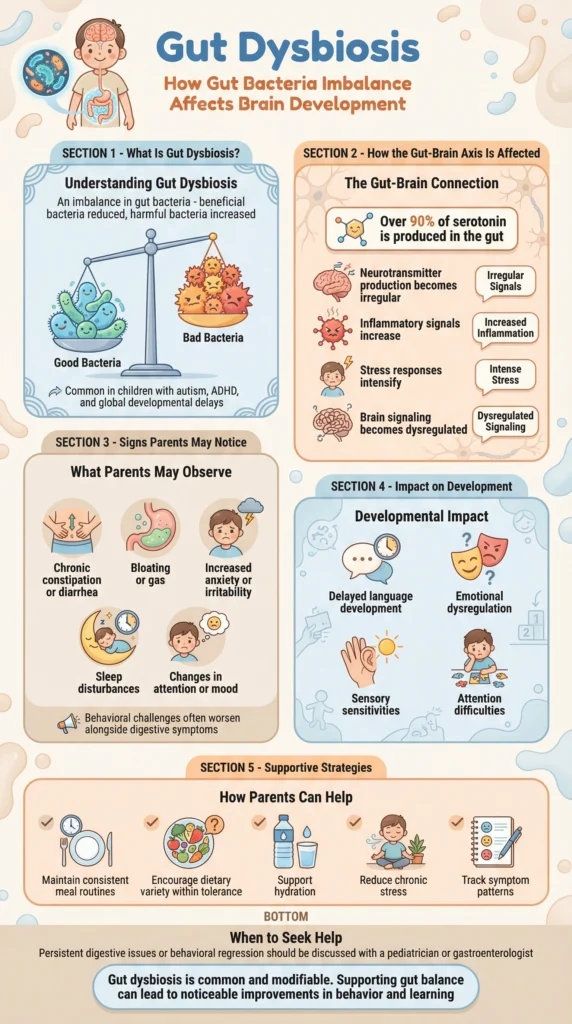
How Gut Dysbiosis Affects the Gut–Brain Axis and Brain Function
The gut–brain axis is a two-way communication system between the digestive system and the brain. When the gut microbiome is balanced, this communication works smoothly. However, when dysbiosis occurs, the signals sent to the brain can become disrupted.
An imbalanced gut can affect brain function in several ways:
- Neurotransmitter production becomes irregular
- Inflammatory signals in the body increase
- Stress responses become stronger and more frequent
- Brain signalling becomes less organized and efficient
These changes can influence mood, attention, behaviour, and emotional regulation. Children may become more anxious, irritable, or easily overwhelmed. Because the brain is still developing, these effects can be more noticeable during early childhood.
Common Signs of Gut Dysbiosis Parents May Notice in Children
Gut dysbiosis often shows both physical and behavioural signs. Parents may first notice digestive issues, but changes in mood and behaviour can also be linked to gut health. These symptoms may come and go, or they may become more noticeable over time.
Common signs include:
- Chronic constipation or diarrhoea
- Bloating, gas, or stomach discomfort
- Increased anxiety or irritability
- Sleep disturbances or restless sleep
- Changes in attention, focus, or mood
In many cases, behavioural challenges become stronger when digestive symptoms worsen, showing the connection between the gut and brain.
How Gut Imbalance Can Impact Development, Learning, and Behaviour
When the gut is not functioning properly, the body may not receive the nutrients needed for healthy brain development. This can affect language development, attention span, emotional control, and sensory processing. Children may find it harder to concentrate, manage emotions, or adapt to new situations. Ongoing inflammation in the body can also affect brain plasticity, which is the brain’s ability to learn and grow. During early childhood, this is especially important because the brain is developing rapidly. If gut health is not supported, these developmental processes may be affected. Addressing gut dysbiosis early can help improve both physical health and developmental outcomes.
Supportive Strategies for Parents to Improve Gut Health in Children
Parents can support their child’s gut health through simple and consistent daily habits. Small changes can help improve digestion, support healthy bacteria, and reduce stress on the body.
Helpful strategies include:
- Maintain regular meal times and routines
- Encourage a variety of foods within the child’s tolerance
- Ensure proper hydration throughout the day
- Reduce stress and create calm daily routines
- Observe and track food and symptom patterns
These steps help create a stable environment for the gut and support better overall health.
When to Seek Professional Help for Gut Dysbiosis in Children
If a child has ongoing digestive problems, noticeable behavioural changes, or regression in development, it is important to seek professional guidance. A paediatrician or gastroenterologist can evaluate gut health and recommend appropriate treatment or dietary changes. Parents should remember that gut dysbiosis is common and often manageable. With the right support, many children show improvements in digestion, behaviour, and learning. By understanding the connection between the gut and brain, caregivers can take meaningful steps to support their child’s development and well-being.