Eosinophilic Gastrointestinal Disorders (EGID) and Feeding Difficulties in Children
Eosinophilic Gastrointestinal Disorders, often called EGID, are allergic inflammatory conditions that affect the digestive tract. These disorders are increasingly recognized in children, especially those with developmental delays or sensory challenges. Because the digestive system and brain communicate through the gut–brain axis, inflammation in the gut can strongly influence feeding behaviour, mood, and comfort during meals.
In children with EGID, certain immune cells called eosinophils build up in the lining of the digestive tract. This condition is known as Eosinophilic Gastrointestinal Disorders and can affect different parts of the gut, including the oesophagus, stomach, or intestines. When these immune cells accumulate, they cause irritation, swelling, and pain. As a result, eating may become uncomfortable, and the child may begin to avoid food without being able to explain why. The connection between the gut and the brain plays a major role in feeding difficulties. Ongoing inflammation sends signals to the nervous system that can change how a child experiences hunger, taste, and fullness. Over time, the brain may begin to associate food with discomfort, which can lead to anxiety during meals and refusal to eat.
Chronic gut inflammation can also affect sensory processing. Some children become extremely sensitive to textures, smells, or temperatures of food. Others may lose interest in eating because their body does not send normal hunger signals. These changes are not behavioural choices but physical responses caused by inflammation and pain.
Signs of EGID-Related Feeding Difficulties in Children
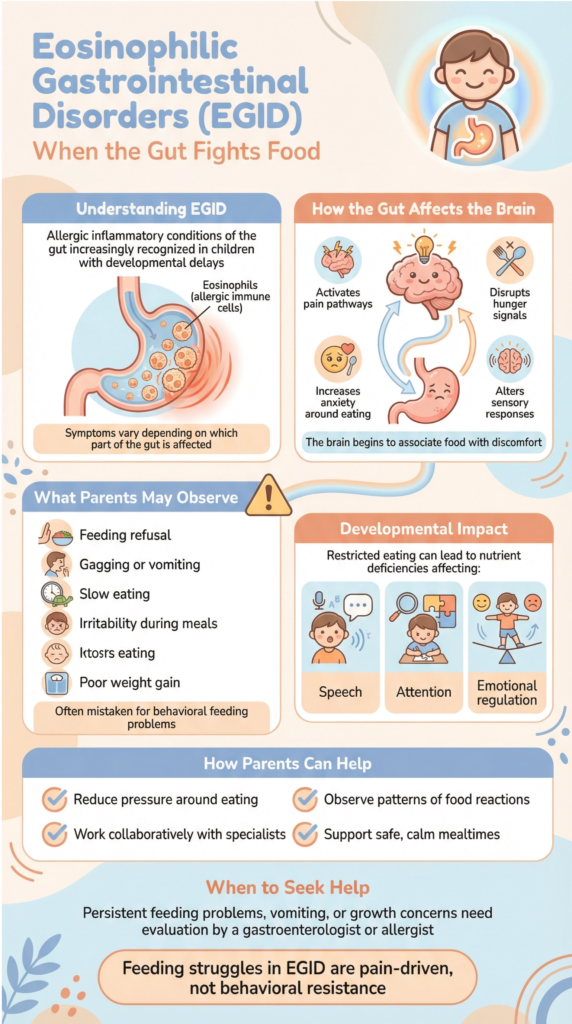
Feeding problems related to EGID often look similar to picky eating or behavioural refusal, which can make diagnosis difficult. However, there are certain patterns that may suggest the child is experiencing discomfort rather than simply resisting food.
Parents may notice the following symptoms of EGID feeding difficulties in children:
- Frequent feeding refusal or sudden loss of interest in food
- Gagging, coughing, or vomiting during or after meals
- Very slow eating or needing extra time to finish food
- Irritability, crying, or distress during mealtimes
- Poor weight gain or difficulty maintaining growth
These signs occur because the digestive tract becomes inflamed, making swallowing or digesting food uncomfortable. When eating causes pain, the child may try to avoid meals to protect themselves, even if they feel hungry. Because feeding struggles can limit the variety and amount of food a child eats, nutritional intake may become restricted. Over time, this can affect brain development, energy levels, and emotional regulation. Children who do not receive enough nutrients may have difficulty with attention, speech development, and learning.
Support Strategies for Parents Managing EGID Feeding Challenges
Supporting a child with EGID requires patience and understanding. Since feeding problems are often caused by physical discomfort, pressure or forceful feeding usually makes the situation worse. Creating a calm and predictable mealtime environment can help the child feel safer and more willing to try food.
Parents can use the following support strategies for feeding difficulties in EGID:
- Reduce pressure around eating and allow the child to eat at their own pace
- Keep track of foods that seem to cause discomfort or reactions
- Maintain calm, structured mealtime routines
- Work closely with medical and feeding specialists
- Offer safe foods that the child tolerates without pain
These approaches help the child rebuild trust with food while medical treatment addresses the underlying inflammation. Professional care is often necessary for children with ongoing feeding problems. Specialists trained in digestive and allergic conditions, such as those treating Eosinophilic Esophagitis, may evaluate symptoms and recommend dietary changes, medications, or therapy. In some cases, feeding therapy or support from Occupational Therapy can help children become more comfortable with eating again.
Understanding That Feeding Struggles Are Not Behavioural
One of the most important things for parents to remember is that feeding refusal in EGID is usually pain-driven, not defiance. When a child connects food with discomfort, avoidance becomes a natural protective response. With proper medical care, supportive routines, and patience, many children with EGID gradually improve their comfort with eating. Addressing gut inflammation while supporting emotional security helps children feel safer during meals and supports healthy growth and development.