Chronic constipation is one of the most common gastrointestinal issues seen in children with developmental delays, especially those with autism spectrum disorder (ASD) and ADHD. While constipation is often thought of as a simple digestive problem, research now shows that it is closely connected to brain function through the gut–brain axis.
What Is Chronic Constipation?
Chronic constipation usually means infrequent bowel movements, hard or dry stools, straining, or pain during passing stools for several weeks or longer. In children with communication difficulties, constipation may not be verbally expressed but instead shown through behaviour.
How the Gut–Brain Axis Is Involved
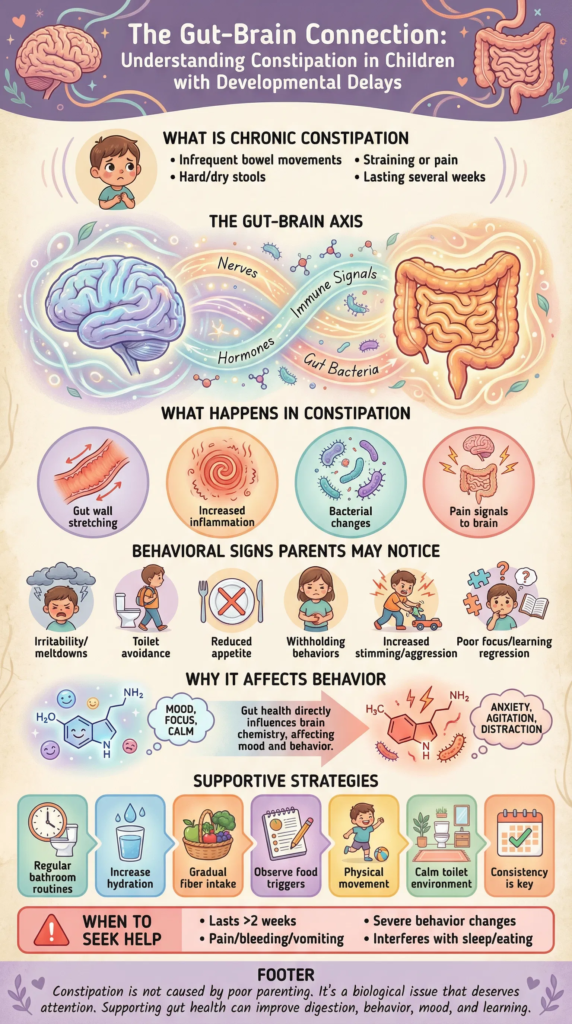
The gut and brain communicate constantly through nerves, hormones, immune signals, and gut bacteria. When stool stays in the intestines too long, it causes:
- Stretching of the gut wall
- Increased inflammation
- Changes in gut bacteria
- Pain signals sent to the brain
These signals can disrupt emotional regulation, attention, and behaviour.
Signs Parents May Notice
In children with developmental delays, constipation may appear as:
- Irritability or frequent meltdowns
- Avoidance of the toilet
- Reduced appetite
- Withholding behaviours
- Increased stimming or aggression
- Poor focus or learning regression
Many parents notice behavioural challenges worsen when constipation is severe.
Why Constipation Affects Development and Behaviour
The gut produces neurotransmitters such as serotonin, which helps regulate mood and focus. Constipation can reduce healthy serotonin signalling and increase stress hormones. Chronic discomfort also activates the brain’s pain pathways, making children more anxious, restless, or emotionally reactive. In some children, constipation is linked with high blood serotonin levels, which may affect social behaviour and sensory processing.
Supportive Strategies for Parents
While medical treatment should always be guided by a doctor, parents can support gut–brain health by:
- Encouraging regular bathroom routines
- Increasing hydration
- Supporting fiber intake gradually
- Observing food triggers
- Promoting physical movement
- Maintaining a calm, pressure-free toilet environment
Consistency is key, especially for children who resist change.
When to Seek Professional Help
Consult a paediatrician or gastroenterologist if constipation:
- Lasts more than two weeks
- Causes pain, bleeding, or vomiting
- Leads to severe behaviour changes
- Interferes with sleep or eating
A Reassuring Note for Parents
Constipation is not caused by poor It is a biological and neurological issue that deserves attention. Supporting gut health often leads to improvements not just in digestion—but in behaviour, mood, and learning as well.