Bloating and Sensory Overload in Children with Developmental Delays: Understanding the Gut–Brain Axis
Bloating in children with developmental delays is a common yet often misunderstood digestive issue. While it may appear minor, the connection between bloating and sensory overload in children is strongly influenced by the gut–brain axis. This communication system links the digestive tract and the nervous system, meaning abdominal discomfort can directly affect behaviour, mood, and emotional regulation. For children with autism spectrum disorder (ASD), ADHD, or sensory processing challenges, bloating can intensify sensitivity to sound, touch, clothing textures, and environmental changes. Understanding this gut–brain connection helps parents respond with empathy and targeted support rather than assuming behavioural defiance.
What Causes Bloating and Why It Affects Sensory Regulation
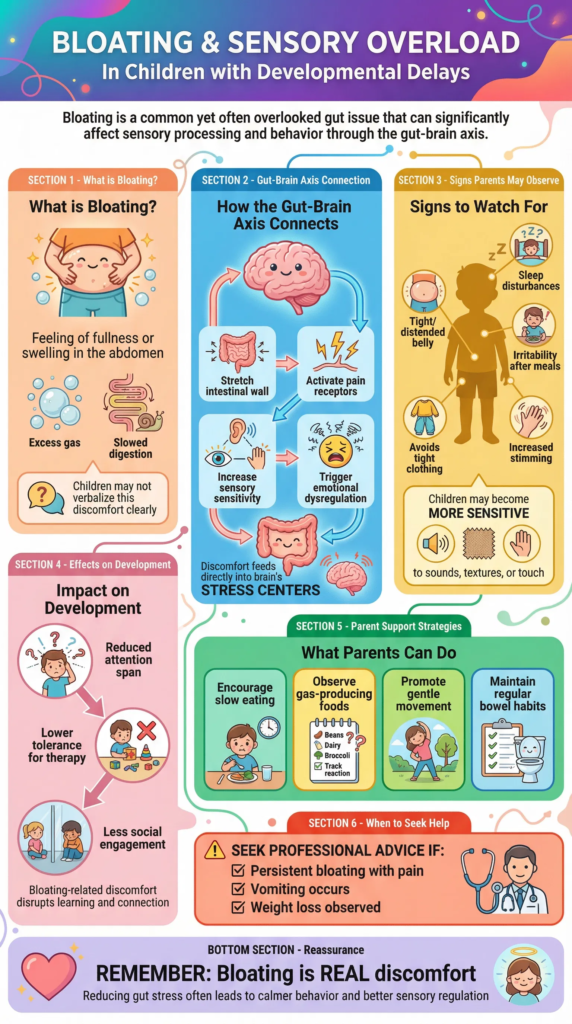
Bloating refers to a feeling of fullness, tightness, or swelling in the abdomen. It is commonly caused by excess gas, constipation, slowed digestion, or microbial imbalance in the gut. In children with developmental delays, digestion may already be slower or more reactive, increasing the likelihood of discomfort after meals. Through the gut–brain axis in developmental disorders, gas-producing bacteria and delayed motility can stretch the intestinal walls and activate pain receptors. These signals travel through neural pathways such as the vagus nerve to the brain’s stress centres. As a result, the nervous system becomes more alert and reactive. When digestive stress increases, children may experience heightened sensory sensitivity and emotional dysregulation. A child who is bloated may have reduced tolerance for therapy sessions, difficulty focusing in school, or stronger reactions to minor frustrations. Chronic abdominal discomfort can also shorten attention span and decrease willingness to participate socially. Because many children cannot clearly describe bloating, parents must observe physical and behavioural cues. Recognizing the early signs of digestive discomfort in children with special needs can prevent escalation.
Signs of Bloating and Sensory Overload Parents Should Watch
Children may not say “I feel bloated,” but their behaviour often communicates what their body cannot express. Watch for these common signs:
- A tight, swollen, or visibly distended belly
- Irritability or meltdowns after meals
- Increased stimming or repetitive movements
- Avoidance of tight waistbands or fitted clothing
- Greater sensitivity to sounds, textures, or touch
- Restless sleep or nighttime discomfort
These symptoms suggest that abdominal pressure may be feeding into the nervous system’s stress response. The link between gastrointestinal discomfort and sensory sensitivity in children is stronger than many parents realize.
Supportive Strategies to Reduce Bloating and Improve Regulation
Supporting gut health can significantly reduce behavioural instability. Practical daily strategies often improve both digestive comfort and emotional balance:
- Encourage slow eating and thorough chewing
- Identify and monitor foods that increase gas or discomfort
- Promote gentle movement such as walking after meals
- Support regular bowel habits and adequate hydration
- Maintain predictable daily routines to reduce stress
These strategies work together to calm the digestive system and lower overall sensory overload. When gut stress decreases, many parents notice calmer behaviour and improved participation in learning and therapy.
When to Seek Professional Advice
Persistent bloating accompanied by severe pain, vomiting, chronic constipation, diarrhea, or weight loss should be medically evaluated. A paediatrician or paediatric gastroenterologist can assess for food intolerances, motility disorders, or other gastrointestinal conditions. Early medical guidance ensures proper treatment and prevents nutritional deficiencies.
Reassurance for Parents
Bloating is real physical discomfort, not attention-seeking behaviour. For children with developmental delays, digestive stress can quickly translate into emotional and sensory challenges. By addressing gut health and maintaining supportive routines, parents can help restore comfort, improve sensory regulation, and promote healthier developmental progress.