Eosinophilic Gastrointestinal Disorders (EGID) and Feeding Difficulties in Children with Developmental Delays
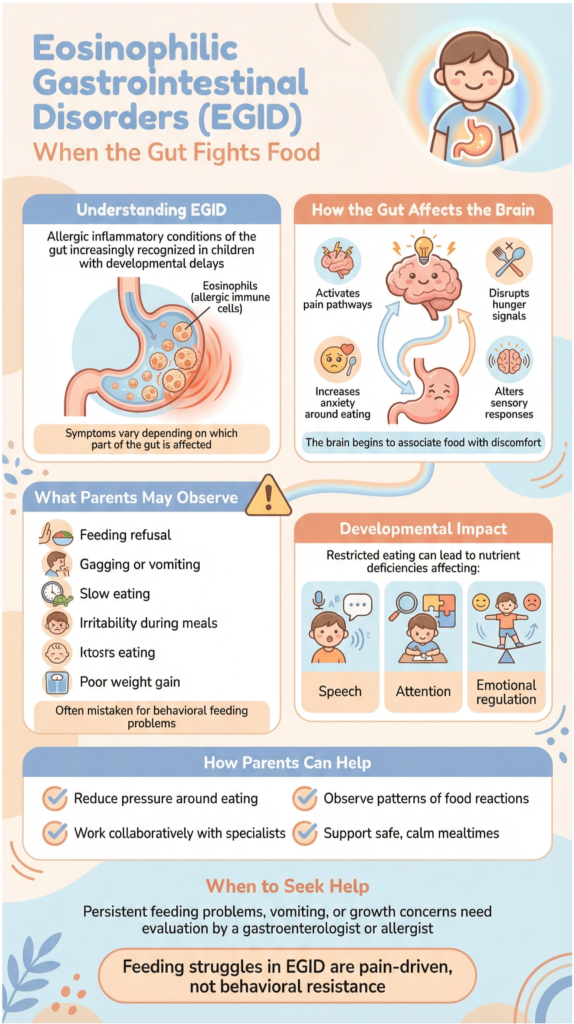
Eosinophilic Gastrointestinal Disorders (EGID) are allergic inflammatory conditions of the digestive tract that are increasingly recognized in children with developmental delays, autism, and sensory processing difficulties. These conditions can strongly affect feeding habits, comfort during meals, and even behavior due to the powerful connection between the gut and the brain, known as the gut–brain axis. Many parents assume feeding refusal or picky eating is behavioral, but in children with EGID, the difficulty often comes from pain, discomfort, and allergic inflammation inside the digestive system.
What Is Eosinophilic Gastrointestinal Disorder (EGID) in Children?
EGID occurs when eosinophils, a type of allergic immune cell, build up in different parts of the digestive tract such as the esophagus, stomach, or intestines. This build up causes chronic inflammation, which makes eating uncomfortable or painful for the child. Symptoms can vary depending on which part of the gut is affected, but the condition often leads to feeding difficulties, stomach pain, vomiting, and slow growth. Because these symptoms may look like normal picky eating, EGID is sometimes missed in children with developmental challenges.
How the Gut–Brain Axis Causes Feeding Anxiety and Food Refusal
The gut and brain communicate constantly through nerves, hormones, and immune signals. When allergic
inflammation continues for a long time, it affects how the brain interprets hunger, pain, and safety around food.
Chronic inflammation in EGID can:
- Activate pain pathways that make eating uncomfortable
- Disrupt hunger and fullness signals
- Increase anxiety during mealtimes
- Change sensory responses to taste, smell, and texture
- Make the brain associate food with discomfort
Because of this, the child may refuse food not out of stubbornness, but because their body expects pain when they eat.
Common Signs of EGID-Related Feeding Difficulties Parents Should Watch
Parents often notice feeding problems long before the diagnosis is made. These signs may look behavioral but can actually be caused by allergic inflammation in the digestive system.
- Feeding refusal or avoiding certain foods
- Gagging, choking, or vomiting during meals
- Very slow eating or needing long time to finish food
- Irritability or crying during feeding
- Poor weight gain or growth delay
How Feeding Problems in EGID Affect Child Development
When a child eats only a few foods or avoids eating because of discomfort, the body may not get enough nutrients needed for brain development. This can affect speech, learning, and emotional regulation. Restricted eating caused by EGID may lead to low iron, low protein, vitamin deficiencies, and poor energy levels. Over time, these nutritional problems can make attention, behaviour, and communication more difficult, especially in children who already have developmental delays. Early recognition and treatment can prevent long-term problems.
Supportive Strategies for Parents Managing EGID Feeding Issues
Parents play an important role in helping children feel safe during meals. Forcing food often makes the child more anxious, especially when eating causes pain. Helpful strategies include observing food reactions carefully, reducing pressure during meals, and working with specialists who understand both feeding and allergy-related problems. Calm mealtimes, predictable routines, and safe foods can help the child rebuild trust with eating.
When to Seek Medical Help for Persistent Feeding Problems
If a child has ongoing feeding refusal, vomiting, slow growth, or strong anxiety around food, medical evaluation is important. A paediatric gastroenterologist or allergist can check for EGID and other allergic gut conditions. Feeding struggles in EGID are not a discipline problem and not a parenting mistake. They are usually pain-driven responses caused by inflammation in the digestive tract. With the right diagnosis, treatment, and supportive feeding approach, most children can improve and develop healthy eating patterns.