Gastroesophageal Reflux Disease (GERD) and Behavioural Changes
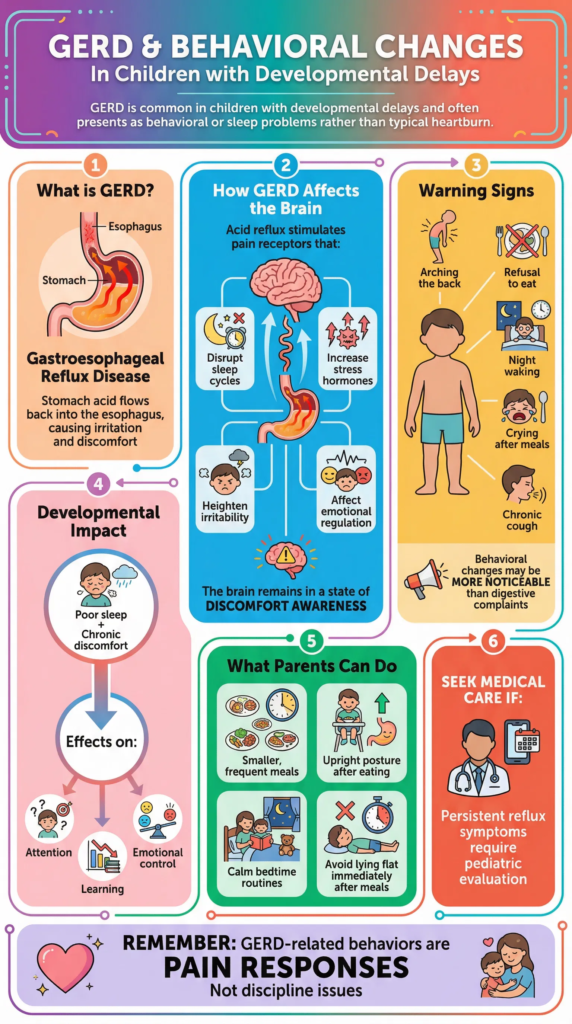
GERD is common in children with developmental delays and often presents as behavioural or sleep problems rather than typical heartburn.
What Is GERD?
GERD occurs when stomach acid flows back into the oesophagus, causing irritation and discomfort.
The Gut–Brain Axis Role
Acid reflux stimulates pain receptors that:
- Disrupt sleep cycles
- Increase stress hormones
- Heighten irritability
- Affect emotional regulation
The brain remains in a state of discomfort awareness.
Signs Parents May Observe
- Arching the back
- Refusal to eat
- Night waking
- Crying after meals
- Chronic cough
Behavioural changes may be more noticeable than digestive complaints.
Impact on Development
Poor sleep and chronic discomfort affect attention, learning, and emotional control.
Supportive Strategies
- Smaller, frequent meals
- Upright posture after eating
- Calm bedtime routines
- Avoid lying flat immediately after meals
When to Seek Medical Care
Persistent reflux symptoms require paediatric evaluation.
Parent Reassurance
GERD-related behaviours are pain responses, not discipline issues.