Gas (Flatulence) and Social Withdrawal in Children: Understanding the Gut–Brain Axis Connection
Excessive gas in children is often dismissed as a minor digestive issue. However, in children with developmental delays, chronic flatulence can significantly affect physical comfort, emotional regulation, and social participation. Through the gut–brain axis in children, digestive discomfort does not remain confined to the abdomen—it influences mood, behaviour, and confidence.
Understanding Gas in Children with Developmental Delays
Gas forms when gut bacteria ferment undigested carbohydrates in the intestines. While this is a normal biological process, children with gut dysbiosis and flatulence may produce excessive gas due to microbial imbalance, slow motility, food sensitivities, or malabsorption issues. In children with autism, ADHD, sensory processing differences, or other developmental conditions, the nervous system is often more reactive. Even mild abdominal pressure can feel overwhelming. This is why chronic gas in children with autism or related conditions may lead to behavioural changes that appear unrelated to digestion.
How the Gut–Brain Axis Amplifies Discomfort
The digestive tract is closely connected to the brain
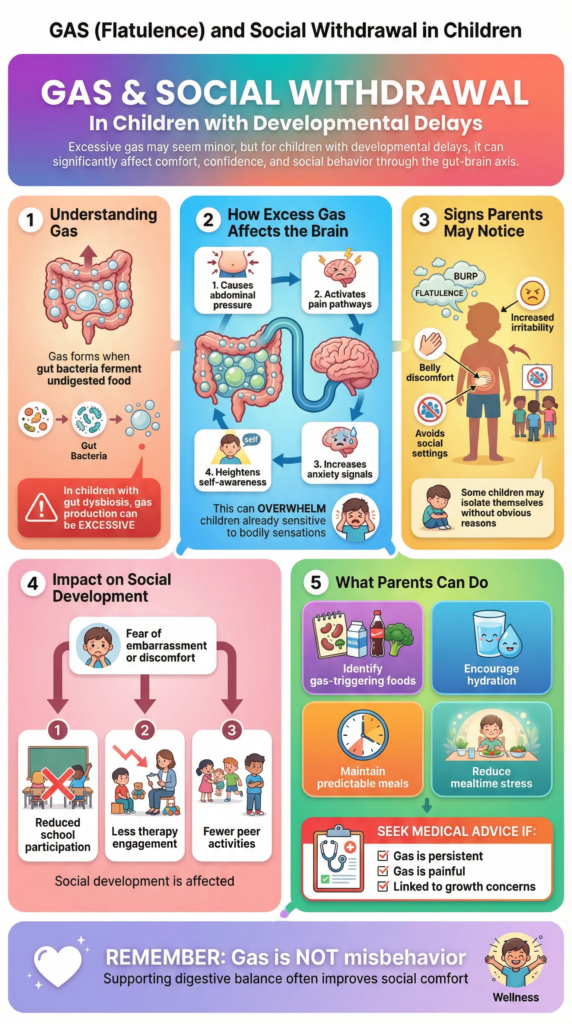
through the enteric nervous system and vagus nerve signalling. When excess gas stretches the intestinal walls, pain receptors activate and send distress signals to the brain. In sensitive children, this can escalate quickly into anxiety, irritability, or withdrawal.
Excess gas can:
- Cause abdominal pressure and bloating
- Activate visceral pain pathways
- Increase stress and anxiety signals
- Heighten body awareness and self-consciousness
For a child who is already sensory-sensitive, this internal discomfort may feel unpredictable and embarrassing. The result is often social avoidance due to digestive discomfort rather than intentional isolation.
Signs Parents May Notice
Children do not always verbalize digestive discomfort clearly. Instead, it may present as subtle behavioural changes. Parents supporting children with gut–brain imbalance may observe patterns such as:
- Frequent burping or excessive flatulence
- Complaints of belly pain or visible bloating
- Avoidance of group settings or classroom participation
- Increased irritability, especially after meals
- Withdrawal from peers without obvious explanation
In some cases, children may refuse therapy sessions, school activities, or family gatherings. What appears as defiance may actually be fear of embarrassment related to gas symptoms.
Developmental and Emotional Impact
When digestive discomfort becomes chronic, it can influence confidence and social learning. A child who fears passing gas in public may avoid sitting close to peers, participating in circle time, or engaging in team activities. Over time, this can slow social skill development and reinforce anxiety patterns. The emotional effects of flatulence in children extend beyond physical discomfort. Persistent bloating can reduce concentration, increase fatigue, and lower frustration tolerance. For children already working hard to regulate sensory input and emotions, added internal discomfort may tip the balance toward withdrawal. Addressing digestive health in special needs children is therefore not only about physical relief—it is about supporting participation, resilience, and emotional security.
Supportive Steps for Parents
Gentle, consistent strategies can help reduce gas and improve comfort:
- Identify potential gas-triggering foods such as excess dairy, processed sugars, or certain fermentable carbohydrates
- Encourage regular hydration to support digestion and motility
- Maintain predictable meal timing to stabilize gut rhythms
- Reduce mealtime stress and sensory overload
- Promote slow eating and mindful chewing
- Track patterns between foods, mood, and behaviour
Small adjustments often lead to noticeable improvements in both digestive comfort and social confidence.
When to Seek Medical Advice
While occasional gas is normal, medical consultation is important if flatulence is persistent, painful, associated with poor growth, severe bloating, chronic diarrhea, or significant behavioural regression. A paediatrician or paediatric gastroenterologist can evaluate for food intolerances, dysbiosis, or underlying digestive conditions.
Reassurance for Parents
Gas is not misbehaviour. It is a physiological process that may be amplified in children with sensitive nervous systems. When digestive balance improves, many families notice better mood stability, reduced anxiety, and increased willingness to engage socially. By understanding the connection between flatulence and social withdrawal in children, parents can respond with empathy rather than frustration—supporting both gut health and emotional development through a whole-child approach.