Stomach-Aches, Anxiety, and the Developing Brain: Understanding the Gut–Brain Connection in Children
Stomach-aches are one of the most common physical complaints in childhood. However, many parents are surprised to learn how closely stomach-aches and anxiety in children are connected. Through the gut–brain axis, emotional stress and digestive discomfort influence each other in powerful ways. This connection is especially significant in children with developmental delays, sensory sensitivities, or emotional regulation challenges. Understanding the relationship between stomach pain and emotional health in children helps parents respond with empathy and informed support.
Understanding Stomach-Aches in Children
Stomach-aches often occur in the upper abdomen and may not always have a clear medical explanation. Even when medical tests appear normal, the pain a child experiences is real. In many cases, these are referred to as functional abdominal pain, meaning the discomfort is linked to how the gut and nervous system communicate rather than to infection or injury. Children with heightened sensory processing differences or anxiety may experience stronger physical reactions to everyday stress. The digestive system is highly sensitive to emotional states. For this reason, stress-related stomach pain in children is common before school, social events, or therapy sessions. The developing brain is still learning how to regulate stress. When emotional regulation skills are immature, the body may express distress through physical symptoms such as nausea, cramping, or a “tight” feeling in the stomach.
How the Gut–Brain Axis Creates a Feedback Loop
The gut and brain communicate constantly through nerves, hormones, and immune pathways. The vagus
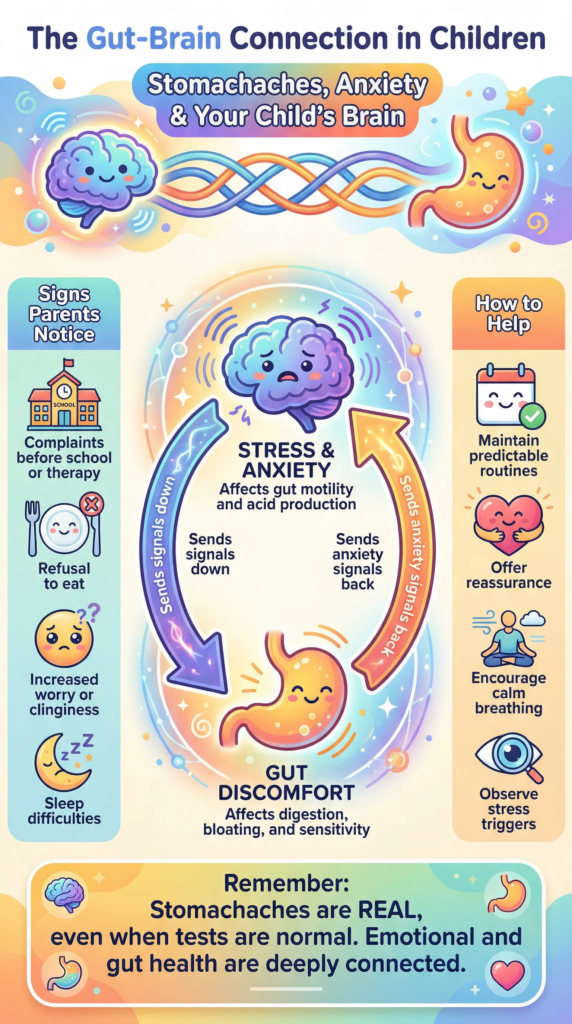
nerve plays a major role in sending signals between the digestive tract and the brain. When a child feels anxious, stress hormones can change gut motility, increase acid production, and heighten pain sensitivity. In return, gut discomfort sends distress signals back to the brain. This can increase worry, irritability, and emotional overwhelm. Over time, this creates a gut–brain anxiety cycle in children where stress worsens stomach pain, and stomach pain increases anxiety. Children with developmental delays may be particularly vulnerable because their nervous systems are often more reactive. They may also struggle to explain internal sensations clearly, leading to frustration or behavioural changes.
Common Signs Linked to Anxiety-Related Stomach-Aches
Because children do not always describe anxiety directly, parents may first notice physical complaints. Recognizing the early signs of anxiety-related stomach-aches in children can prevent escalation and emotional distress.
Parents may observe:
- Frequent complaints of stomach pain before school or therapy
- Refusal to eat, especially during stressful times
- Increased clinginess or separation anxiety
- Heightened worry about routine events
- Difficulty falling asleep or staying asleep
These signs are not attention-seeking behaviours. They are often the body’s way of communicating emotional overload.
Effects on Emotional and Social Development
Chronic stomach-aches can interfere with a child’s confidence and participation. If a child begins to associate certain environments with discomfort, they may avoid school, therapy, or social activities. Over time, this avoidance can affect social development and academic progress. Ongoing digestive discomfort can also weaken emotional regulation skills. When a child is already coping with physical pain, their tolerance for frustration decreases. This can result in meltdowns, withdrawal, or increased anxiety symptoms. Understanding the connection between emotional regulation and stomach pain in children allows caregivers to address both physical and emotional needs together.
Supportive Strategies for Parents
Parents can take practical steps to reduce the impact of anxiety-related stomach-aches and support nervous system regulation.
Helpful approaches include:
- Maintaining predictable daily routines to increase security
- Offering reassurance without dismissing the child’s pain
- Encouraging slow, calm breathing during discomfort
- Identifying and reducing known stress triggers
- Creating a quiet, safe space for emotional regulation
Consistency and empathy are powerful tools. When children feel understood, their stress response often decreases.
When to Seek Medical Care
Persistent, severe, or worsening stomach pain should always be evaluated by a healthcare professional. Symptoms such as weight loss, vomiting, fever, or significant bowel changes require medical attention. Even when tests are normal, discussing functional abdominal pain with a provider can guide supportive care.
A Reassuring Note for Parents
Stomach-aches are real, even when medical tests do not show a clear cause. The connection between gut health and anxiety in children is deeply rooted in biology. By recognizing this link, parents can provide compassionate support that nurtures both the developing brain and the digestive system.